
Last updated November 17, 2026
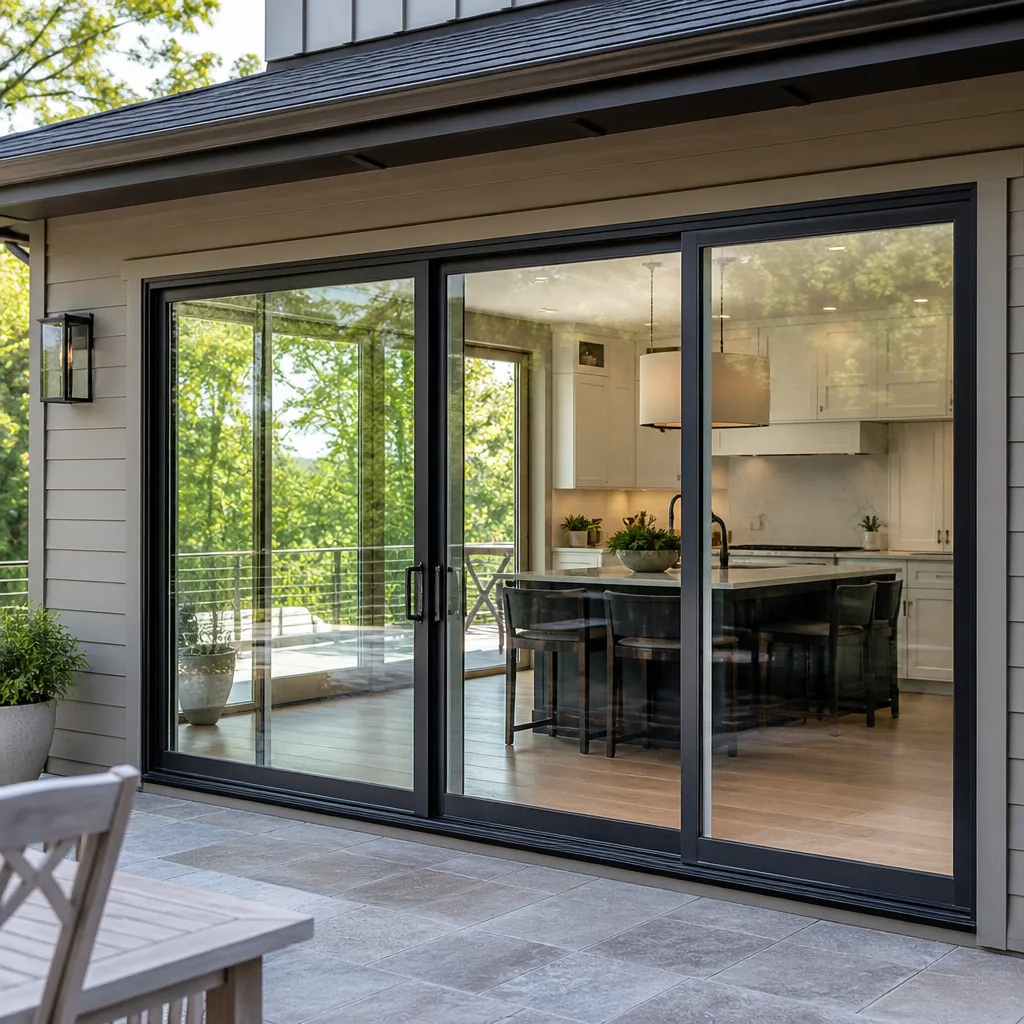 Sliding glass doors
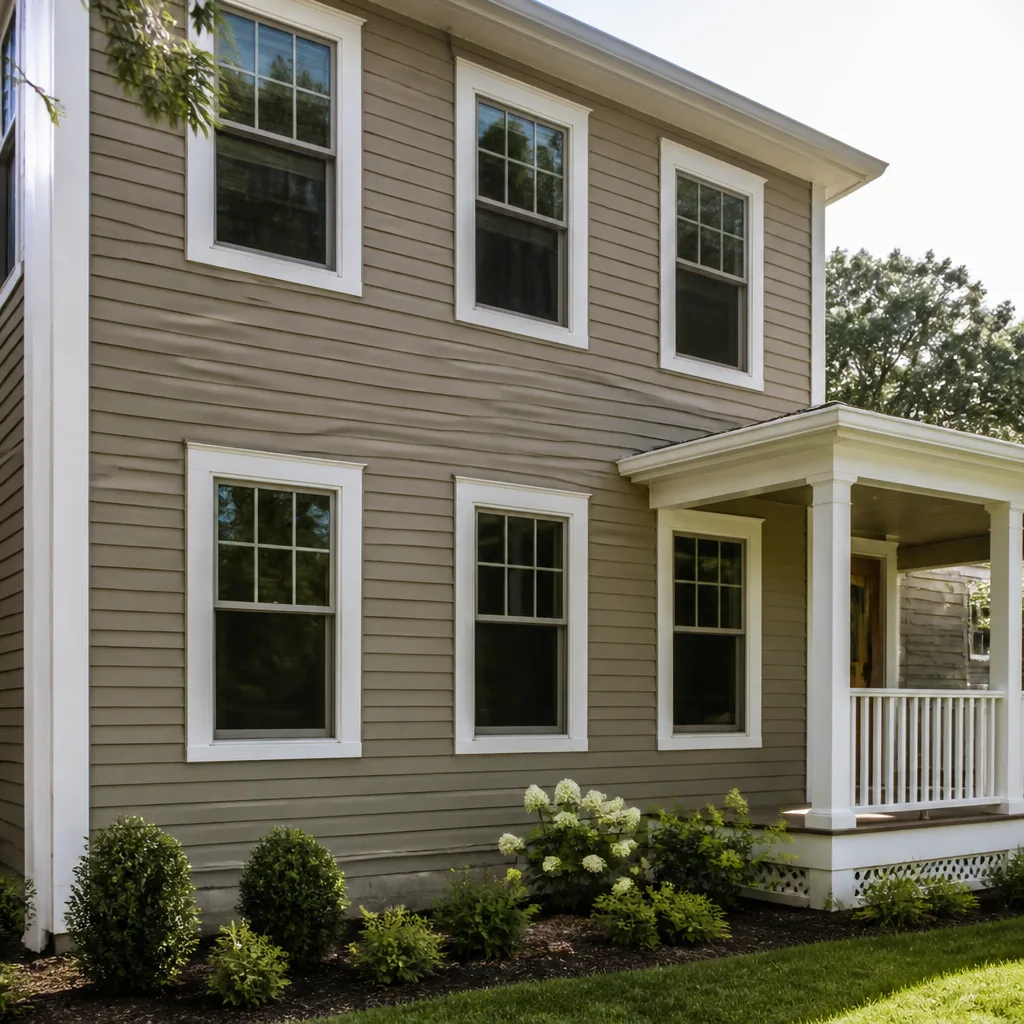 Single hung
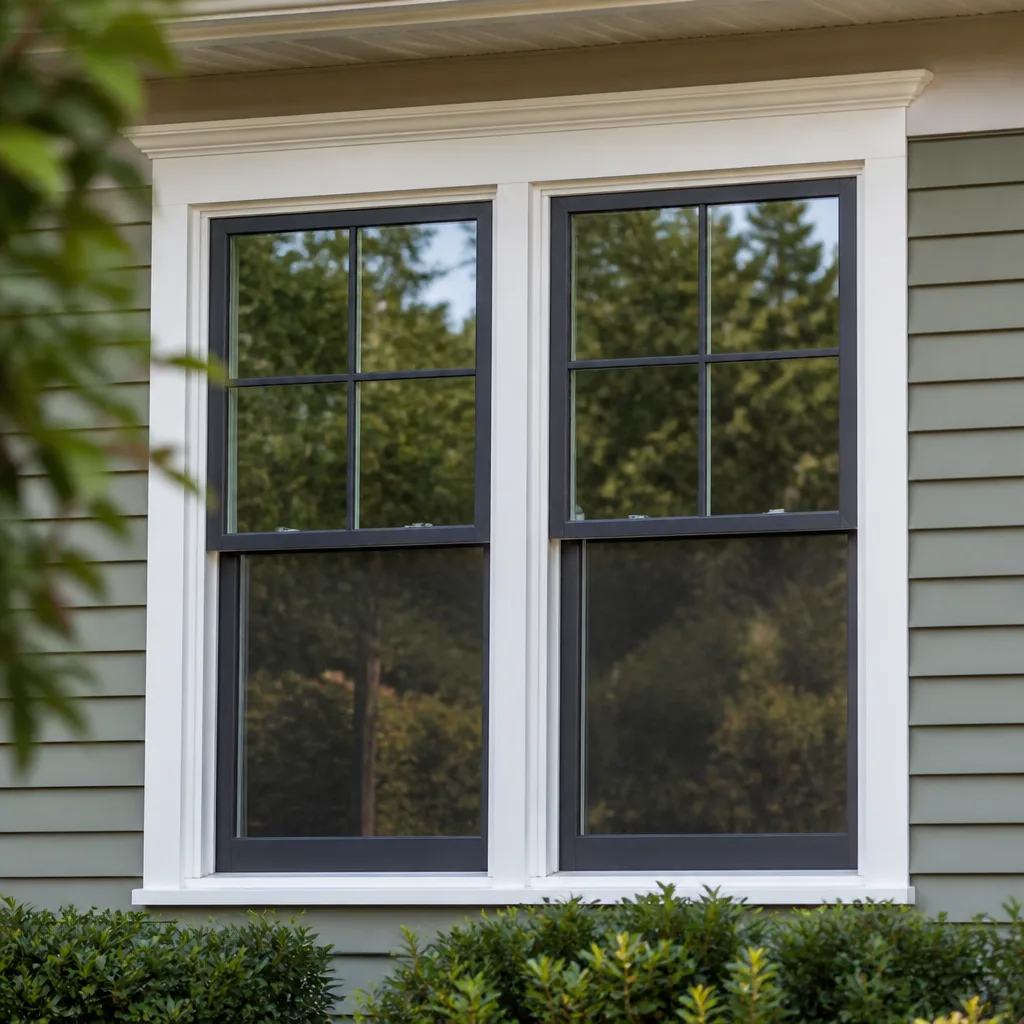 Double hung
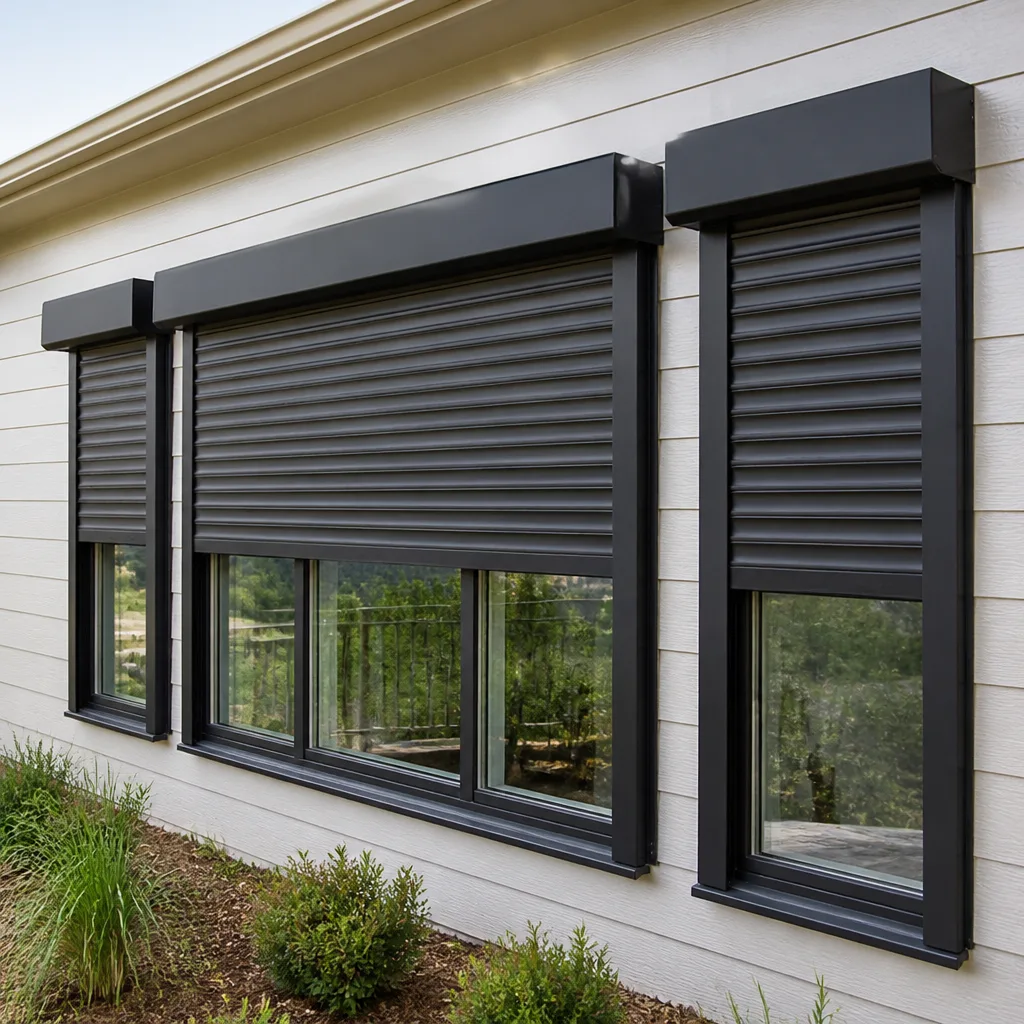 Horizontal roller
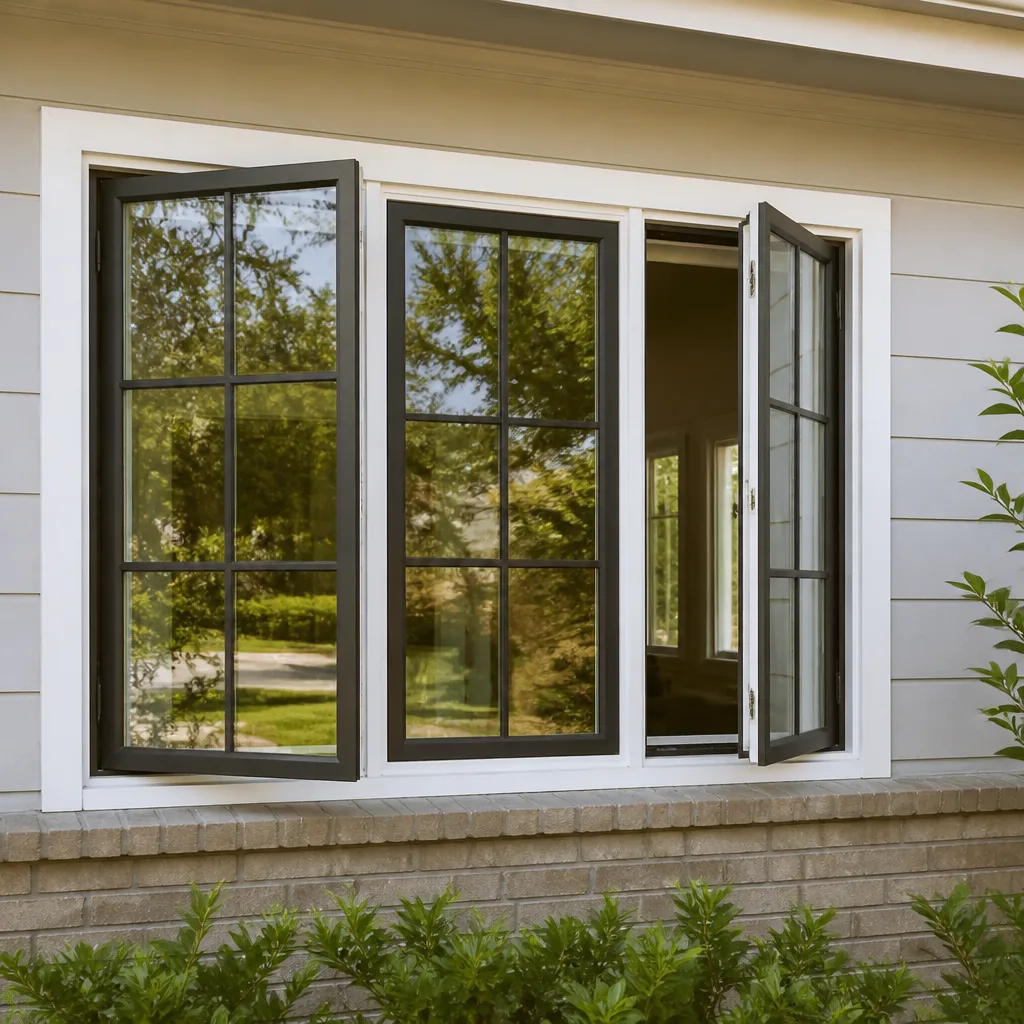 Casement
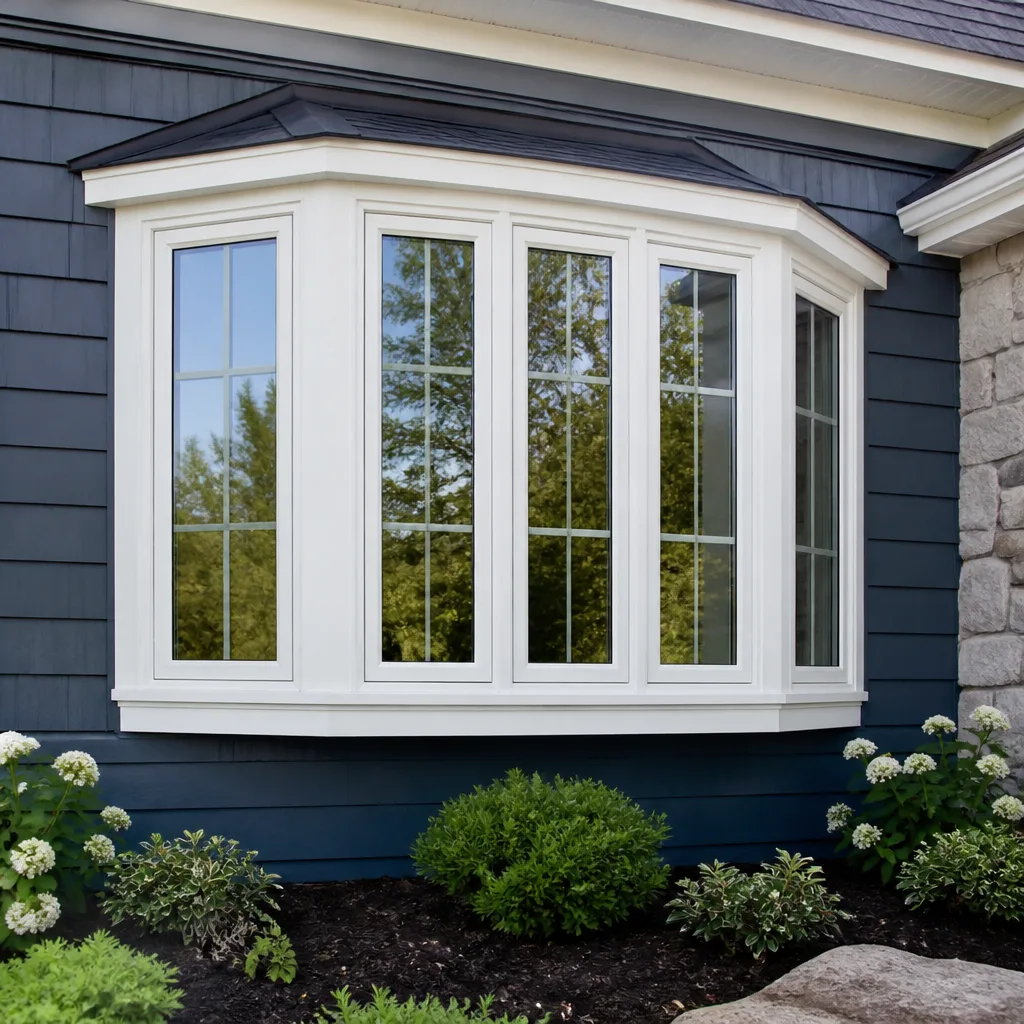 Bay & bow
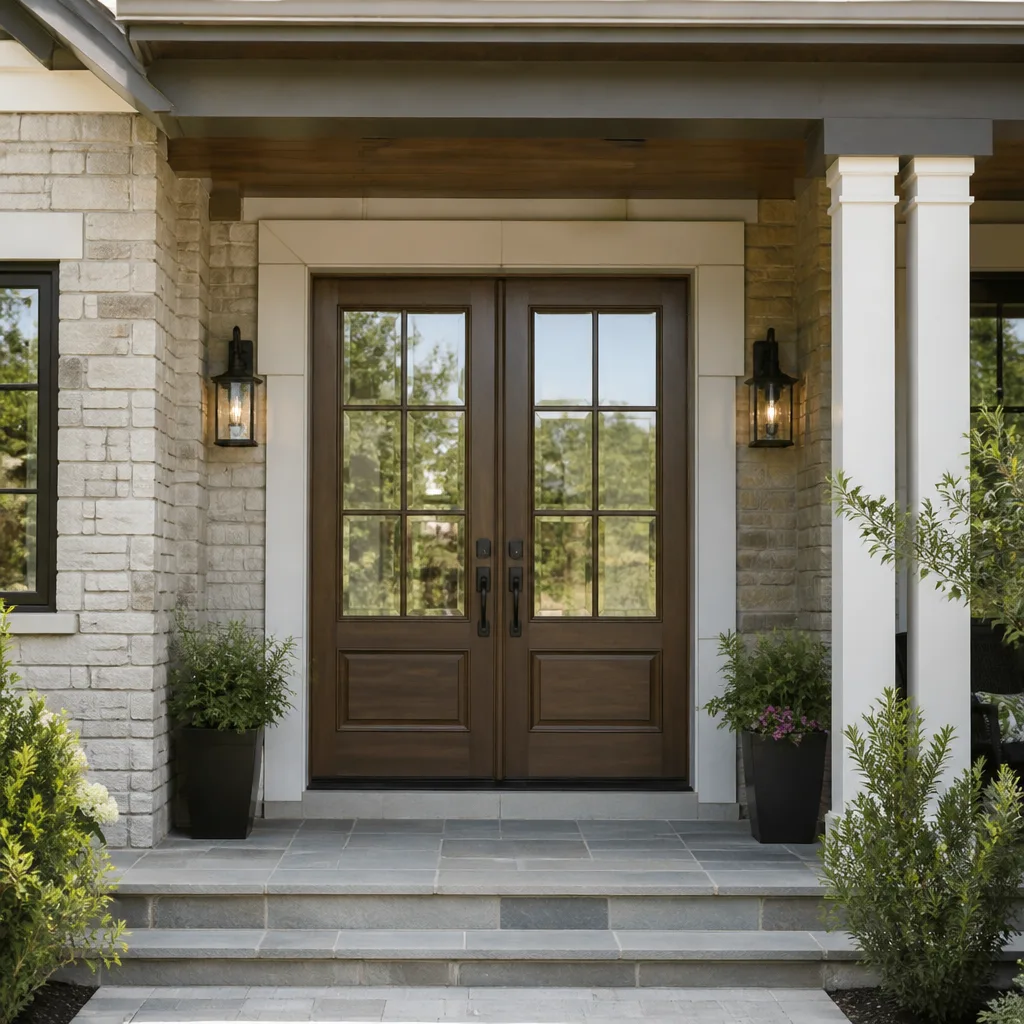 Entry doors
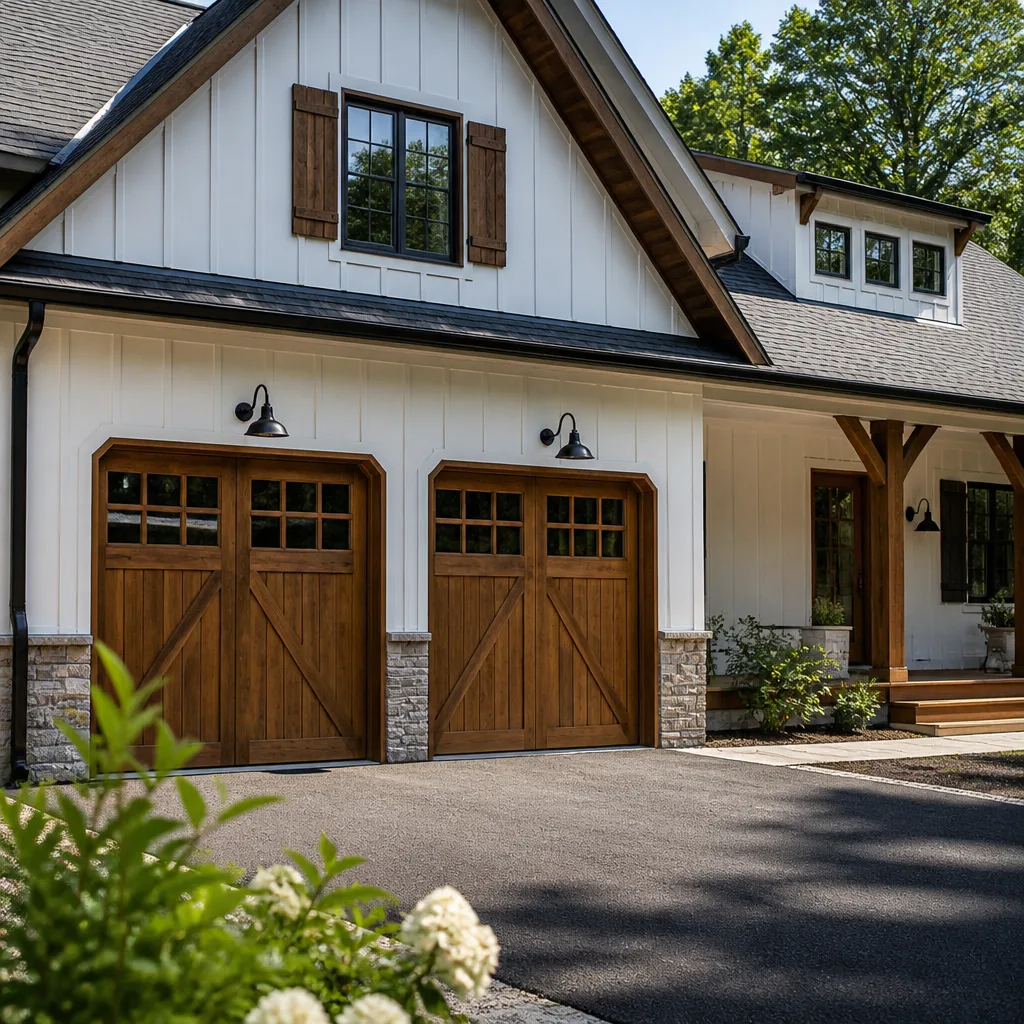 Impact garage doors
 PGT
 CGI
Free in-home measure and quote - PGT, CGI and CWS impact lines compared on your actual openings, style by style
Get your free estimateThe Complete Guide to Windows & Doors in Winchester
Most window guides are written for the Pacific Northwest or the Southeast. Winchester gets 294 days of sun a year and overnight lows that can drop 40°F from the afternoon high – conditions that age a standard double-pane unit years faster than the warranty assumes. That gap between what a warranty promises and what Winchester weather actually delivers is where most homeowners get blindsided. This guide covers the decisions you’ll actually face: which materials survive here, when to repair versus replace, what local permit offices require, and how to spot the early warning signs before a single window becomes a whole-house problem.
Quick Answer
In Winchester, the right windows and doors come down to three things: frame material rated for extreme UV and thermal cycling, glass packages built for high-desert temperature swings, and installation that accounts for wind-driven dust and monsoon-season water intrusion. Vinyl holds up well for most homes, fiberglass handles the heat better on west-facing walls, and aluminum-clad works where you want a painted finish that survives the sun. Replacement timing depends on seal failure and frame condition, not age alone, and Clark County permit rules apply to most full replacements.
Styles & brands we work with
- Single hung
- Double hung
- Horizontal roller
- Casement
- Bay & bow
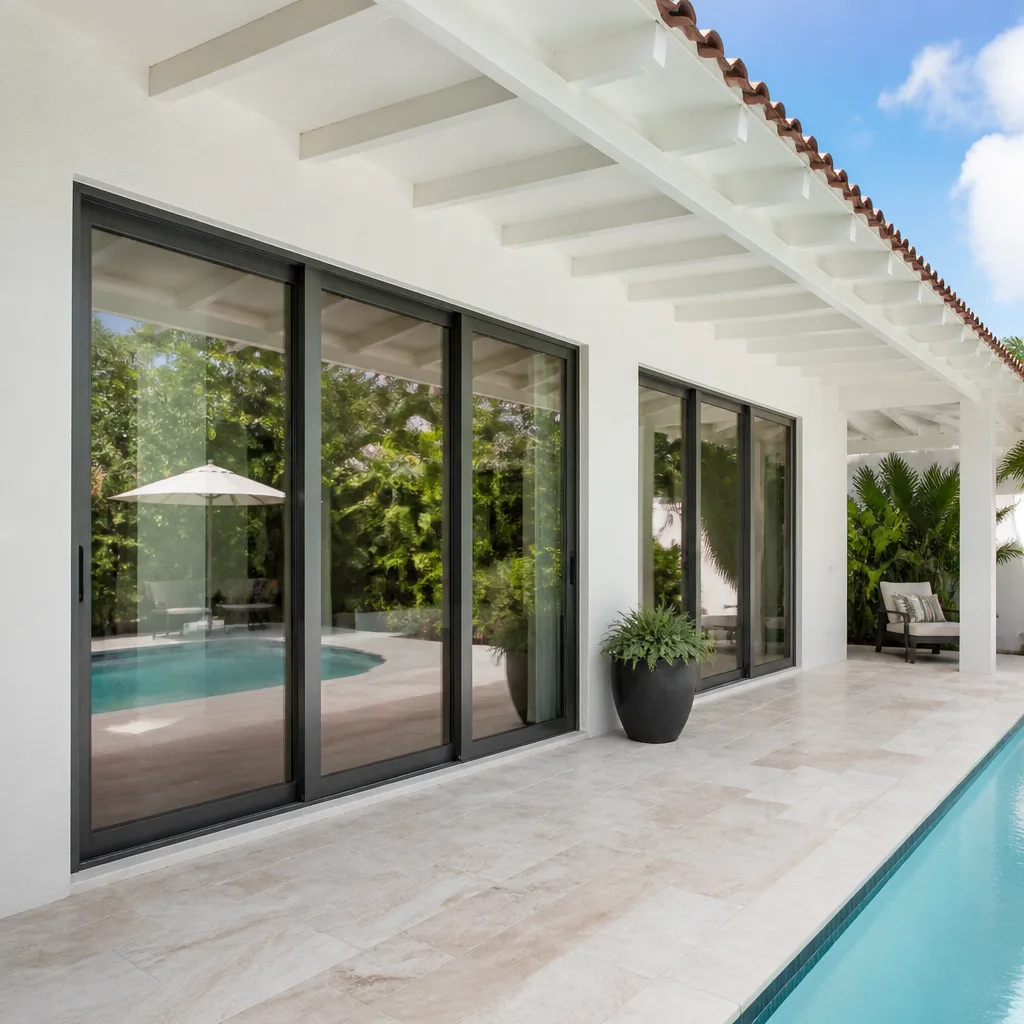
- Sliding glass doors
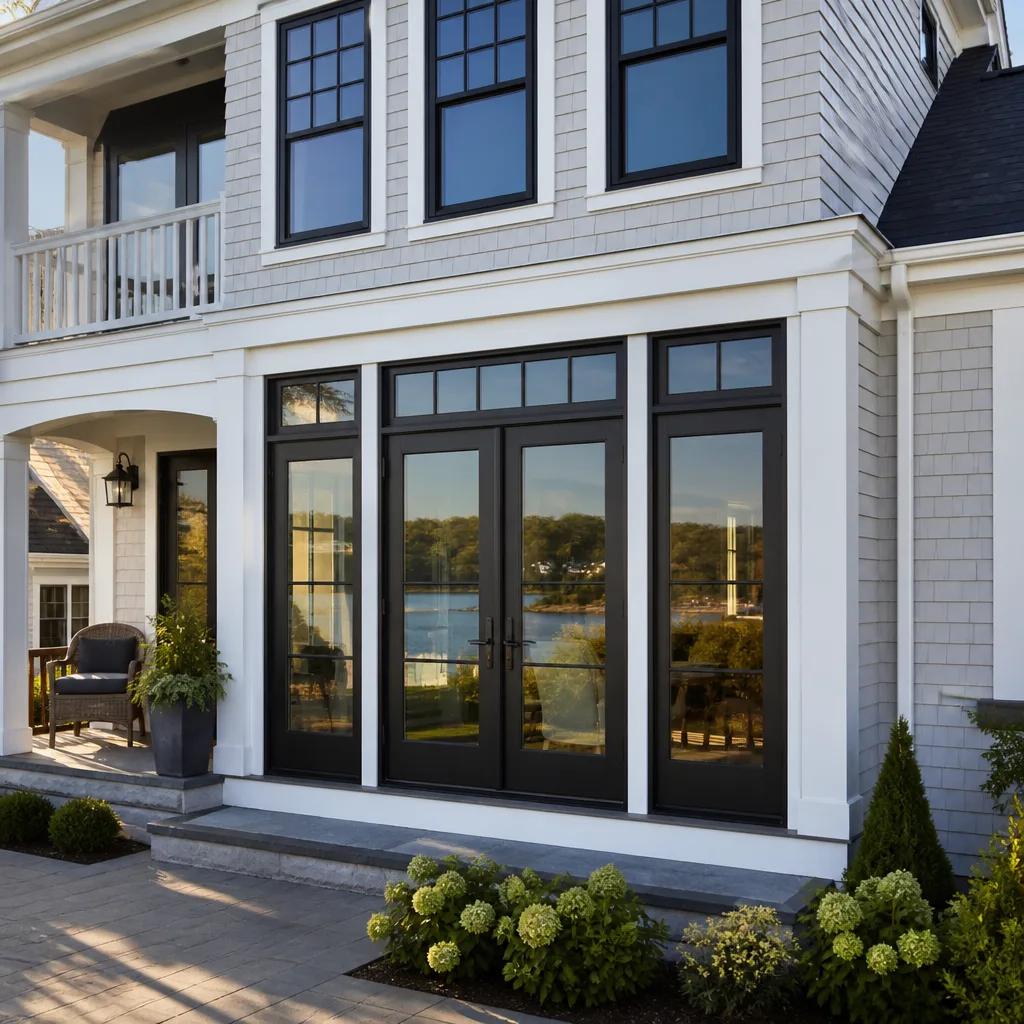
- Entry doors
- Impact garage doors
- PGT
- CGI
Table of Contents
- Why Winchester’s High-Desert Climate Ages Windows Faster
- Which Frame Materials Hold Up Best in Winchester
- Big-Box Stock vs. What a Local Specialist Orders for Desert Installs
- Repair or Replace? A Decision Tree for Winchester Homeowners
- When One Window Is a Warning Sign About the Whole Envelope
- What Clark County Permit Offices Actually Require
- Doors in the Desert: Entry, Patio, and Sliding Glass
- Energy Performance: What Actually Matters in Winchester
Why Winchester’s High-Desert Climate Ages Windows Faster
A window in Winchester lives a harder life than the same window in Seattle or Atlanta. The National Weather Service puts the local UV index in the very-high to extreme range for much of the year, and that intensity attacks more than your skin – it breaks down seals, fades and chalks vinyl, and cooks the desiccant inside insulated glass units until it can no longer absorb moisture. Once that desiccant is spent, you get fogging between the panes, and there’s no fix short of replacing the glass.
Thermal cycling does the rest of the damage. Winchester routinely swings 30 to 40 degrees between afternoon high and overnight low. Every one of those swings expands and contracts the frame, the spacers, and the sealant. Multiply that by 365 days a year and you get tens of thousands of expansion cycles over a decade – far more than a mild-climate installation ever sees. Sealant that would last 20 years in a stable climate can fail in 10 to 12 here.
Wind is the third stressor. High-desert gusts drive fine dust into every gap, and that grit works on weatherstripping and moving parts like sandpaper. Add the monsoon months, when rain arrives sideways in concentrated bursts, and you have a climate that punishes poor installation more than it punishes cheap materials. We’ve seen a mid-grade window installed correctly outlast a premium unit slapped in with a bead of caulk and good intentions.
For homeowners weighing a full upgrade, our impact windows in Winchester page goes deeper on how impact-rated assemblies handle these stresses. The short version: rated glass and reinforced frames give you more margin against all three stressors at once.
Which Frame Materials Hold Up Best in Winchester
Frame material is the single biggest variable in how long a window lasts here. There’s no universal “best” – it depends on which wall the window faces, whether it’s shaded, and what you’re willing to spend. Here’s how the main options stack up against Winchester’s specific conditions.
Vinyl
Vinyl is the most common choice in Winchester, and for good reason. Modern vinyl formulations resist UV better than the vinyl of 20 years ago, and the material doesn’t conduct heat or cold. The weak spot is cheap, thin-walled vinyl, which can warp on a west- or south-facing wall that takes direct afternoon sun. Look for reinforced frames and a reputable brand – CWS and ECO Window Systems both make vinyl lines built for this climate.
Fiberglass
Fiberglass expands and contracts at a rate closer to glass itself, which means fewer stress cycles on the seals. That makes it a strong pick for the hottest exposures – think a wall that bakes from noon to sunset. It holds paint well and doesn’t warp. It costs more than vinyl, and you feel that premium most on a whole-house job.
Aluminum-Clad Wood
Aluminum-clad gives you a wood interior and a metal exterior that shrugs off sun and rain. The aluminum skin handles UV without fading, and the wood inside stays stable because it’s protected. This is the choice for homeowners who want a painted or anodized finish that survives a decade of Winchester sun. It’s the priciest of the three, and it rewards careful installation.
- West and south walls: Fiberglass or premium reinforced vinyl; the sun exposure is relentless.
- Shaded north and east walls: Standard vinyl is usually fine and saves money.
- Whole-house replacement: Match material to exposure per wall rather than picking one for everything.
- Painted finishes: Aluminum-clad holds color far better than painted vinyl under extreme UV.
When you’re ready to talk specifics, our window installation in Winchester page walks through material selection by exposure.
Big-Box Stock vs. What a Local Specialist Orders for Desert Installs
There’s a real difference between the window sitting on a big-box store shelf and the window an installer orders for a Winchester home. The big-box unit is built to a national spec that has to work in Maine and Arizona alike. The specialist unit is configured for this market’s UV load, temperature swing, and wind-driven dust.
What changes in a desert-spec order:
- Glass coating: Low-E coatings tuned for high solar gain reduction, not northern-climate heat retention.
- Spacer system: Warm-edge spacers that handle bigger thermal swings without stressing the seal.
- Frame wall thickness: Heavier vinyl or fiberglass that resists warping under sustained sun.
- Weatherstripping: Dust-rated seals that hold up to grit and wind better than commodity foam.
- Finish: UV-stable colors that won’t chalk or fade in three summers.
Brands matter here too. PGT and CGI build window lines engineered for harsh sun and wind. ES Windows and ViewLux offer configurations that fit desert exposure. The point isn’t that any one brand is magic – it’s that a specialist knows which configuration survives a Winchester summer and orders accordingly, rather than handing you whatever’s stacked by the loading dock. When you call, ask what glass package and spacer the quote includes. If the answer is vague, that’s your first clue.
Repair or Replace? A Decision Tree for Winchester Homeowners
Age alone doesn’t tell you whether to repair or replace. A 15-year-old window in good shape can outlast a 7-year-old one that took direct sun on a bad install. Work through these steps in order and the answer usually becomes obvious.
- Is the glass fogged or hazy between the panes? If yes, the seal has failed and the insulated unit needs replacing. Reglazing one or two units is often cheaper than a full window swap.
- Does the frame warp, crack, or feel soft? Warped vinyl on a sunny wall usually means replacement, not repair. A cracked frame lets water and dust in.
- Do the sashes still open, close, and lock cleanly? Sticking or drafty operation often points to worn hardware or a frame that’s moved. Sometimes that’s a repair; sometimes it’s a sign the frame is done.
- Can you feel air or see daylight around the frame? That’s an installation or weatherstripping problem before it’s a window problem. Resealing may fix it.
- Are multiple windows on the same wall failing at once? That’s the envelope warning – see the next section.
- Is the window more than 15 to 20 years old and showing any of the above? Replacement usually wins on cost over the next decade.
One useful rule we’ve learned in Winchester: repair makes sense when the frame is sound and only the glass or hardware has failed. Replace when the frame itself is the problem. Our window replacement in Winchester page breaks down the cost math on both paths.
When One Window Is a Warning Sign About the Whole Envelope
A single fogged window is a single fogged window. But when the same corner of the house keeps failing – three windows on one wall, a door that won’t latch, a hairline crack in the stucco nearby – you’re not looking at a window problem. You’re looking at a building envelope problem, and replacing that one window again won’t fix it.
What to look for:
- Cluster failure: Two or more windows on the same wall fogging or warping within a year or two of each other.
- Water staining: Dark streaks or soft drywall below a window sill, especially after monsoon rain.
- Stucco cracks radiating from corners: Often points to movement or water intrusion around the opening.
- Doors that stick seasonally: A door that binds in summer and swings free in winter is telling you the frame is moving with the temperature swing.
- Drafts you can’t trace: Air coming in around a frame that looks sealed usually means the opening itself has shifted.
When you see a cluster, the honest move is to have the whole wall or opening evaluated before you spend money on one window. Replacing a single unit into a failing opening is throwing good money after bad. We’d rather tell you that up front than sell you a window you don’t need. That’s the kind of call our Winslow Windows & Doors Winchester home page is built around – you get the truth before the invoice.
What Clark County Permit Offices Actually Require
Permit rules trip up a lot of homeowners because national installers often skip them or wave them off as “not needed for replacements.” In Clark County, that’s not always true. Winchester sits in Clark County, and the county’s building department generally requires a permit when a replacement changes the size of the opening, changes the egress configuration, or affects the structural framing. Like-for-like swaps in the same opening sometimes qualify for a simplified path, but the rules are specific and they get updated – so the correct answer comes from the county, not from a sales pitch.
What to verify before work starts:
- Opening size: Same size and same location usually means a lighter permit path. Enlarging or relocating means a permit and possibly engineering.
- Egress windows: Bedroom windows have minimum opening requirements. Changing one changes the permit picture.
- Impact or wind rating: Rated assemblies may have documentation requirements.
- Inspection: A permitted job gets inspected. Ask who schedules it and who’s on site for it.
National installers frequently don’t pull permits because it costs them time and money. That leaves you holding the risk if a future sale or inspection flags unpermitted work. Ask any installer, “Will you pull the permit and pass the inspection?” A straight yes is what you want. If the answer is “you don’t need one,” get it in writing and verify with the county yourself.
Washoe County rules differ from Clark County on some of these points, so if you’re near the county line, confirm which jurisdiction covers your address before you sign anything.
Doors in the Desert: Entry, Patio, and Sliding Glass
Doors take a beating in Winchester for the same reasons windows do, plus one more: they open and close. Every swing works the weatherstripping and the frame, and under extreme UV and temperature swing, that wear shows up fast. An entry door that faces west can fade, warp, and lose its seal within a few summers if it’s the wrong material.
What holds up here:
- Fiberglass entry doors: Resist warping, hold paint and stain, and handle sun far better than wood. Therma-Tru makes fiberglass entry systems built for this.
- Steel doors: Strong and secure, but the finish has to be UV-stable or it chalks and peels.
- Sliding glass and patio doors: The tracks collect desert dust, so rollers and seals need attention. Warranties on the glass itself can be voided by heat buildup if the door isn’t rated for the exposure.
- Impact-rated options: Worth considering on any glass door that faces the worst of the sun and wind.
Weatherstripping is the unsung hero. On a Winchester door, spend the money on dust-rated seals and check them every year. A worn seal on a $3,000 door costs you comfort and money every month. Mr-Glass and Therma-Tru both offer door and glass options suited to this climate. If you’re weighing a patio door, ask about the glass rating and the track material – those two details separate a door that lasts from one that doesn’t.
Energy Performance: What Actually Matters in Winchester
Energy ratings get treated as an absolute scoreboard, but the right numbers depend on where you live. A window tuned for a cold northern climate keeps heat in; a window tuned for Winchester’s high-desert summer keeps heat out. Getting this wrong is the most common energy mistake we see.
What to prioritize in Winchester:
- Solar heat gain coefficient (SHGC): Lower is better on west and south exposures that bake in the afternoon sun.
- U-factor: Still matters for winter nights when the temperature drops 40 degrees, but it’s usually the second priority here.
- Low-E coating type: A solar-control coating, not a cold-climate coating. Ask which one the quote specifies.
- Air sealing: The best glass in the world loses its advantage if the opening leaks. Installation quality drives real-world performance more than the spec sheet.
Here’s the part national guides skip: the biggest energy gain in a Winchester home usually comes from fixing air leaks and failed seals, not from chasing a slightly better U-factor. A well-installed mid-grade window beats a premium window installed with gaps. When you get quotes, ask how they seal the opening, not just what glass they’re using. That answer tells you more about your future energy bill than any sticker.
Common Mistakes to Avoid
- Buying on U-factor alone. In Winchester’s heat, solar heat gain matters more on sunny walls. A cold-climate window can make your summer cooling bill worse.
- Skipping the permit to save time. Unpermitted replacement work can surface at resale or inspection. Ask the county, not the salesperson.
- Replacing one window into a failing opening. If the frame or surrounding wall has moved, a new window just fails in the same spot. Evaluate the whole opening first.
- Choosing commodity vinyl for a west-facing wall. Thin-walled vinyl warps under sustained desert sun. Match the material to the exposure.
- Ignoring dust-rated weatherstripping. Standard foam seals wear out in a season or two under wind-driven grit. It’s a cheap upgrade that matters here.
- Assuming a national-brand warranty is honored locally. Read who performs the service work and where. A warranty that requires a distant installer is worth less than it looks.
- Letting a cluster of failures go unexamined. Two or three windows failing on the same wall is a signal, not a coincidence. Investigate the envelope, not just the glass.
See the difference
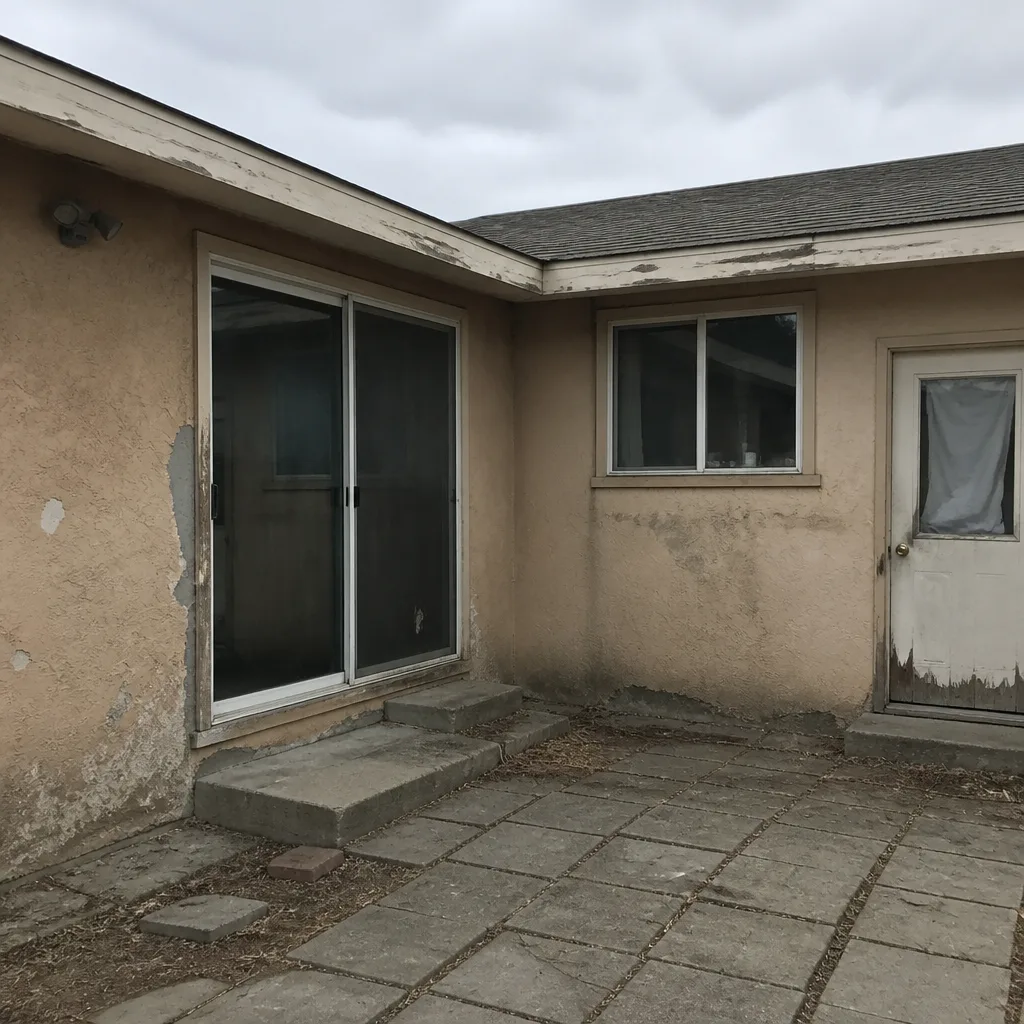 Before
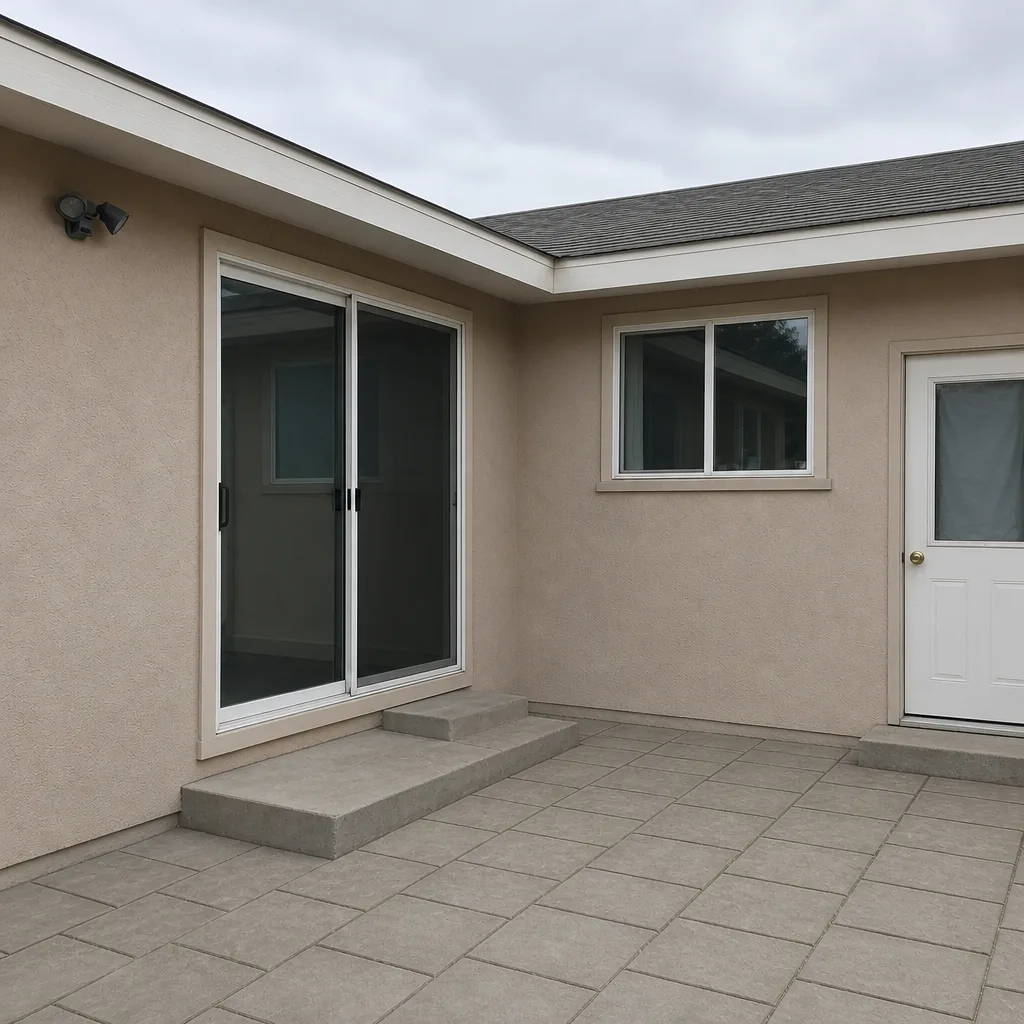 After
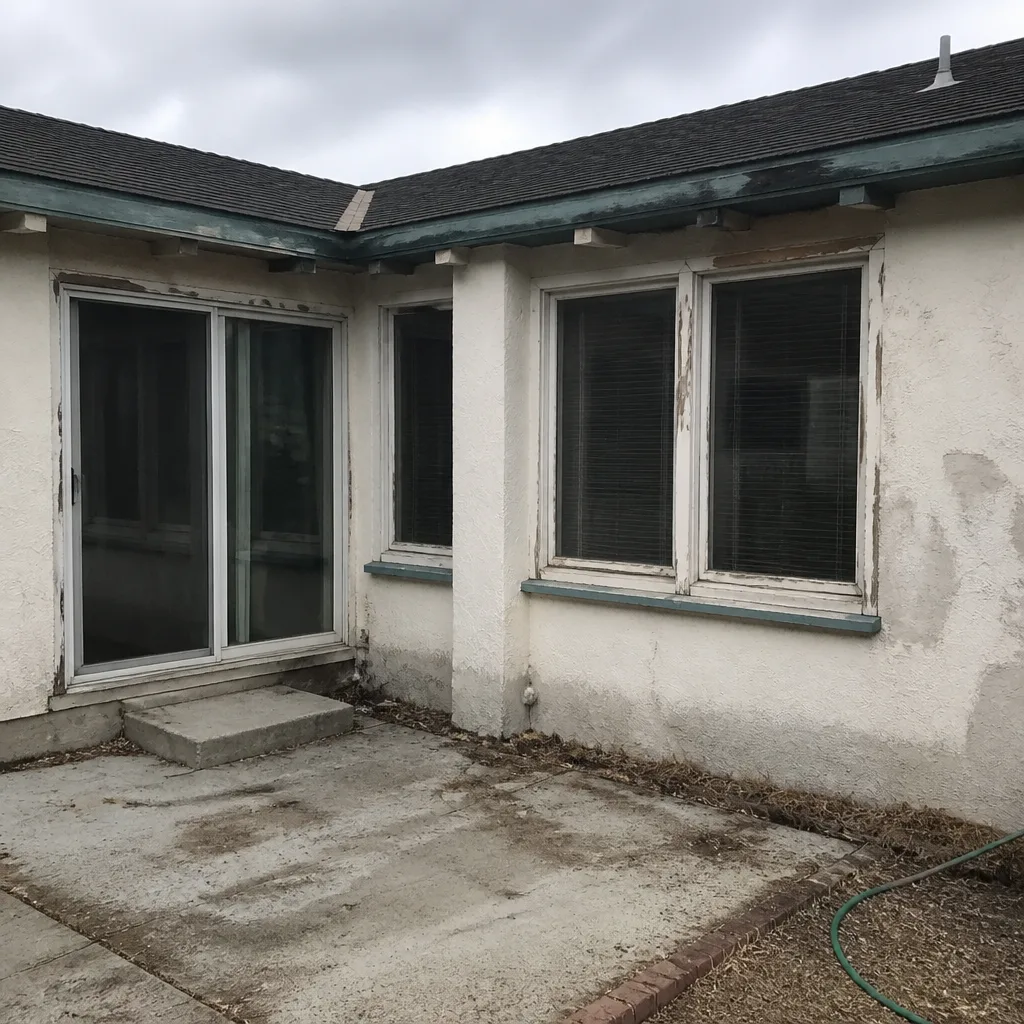 Before
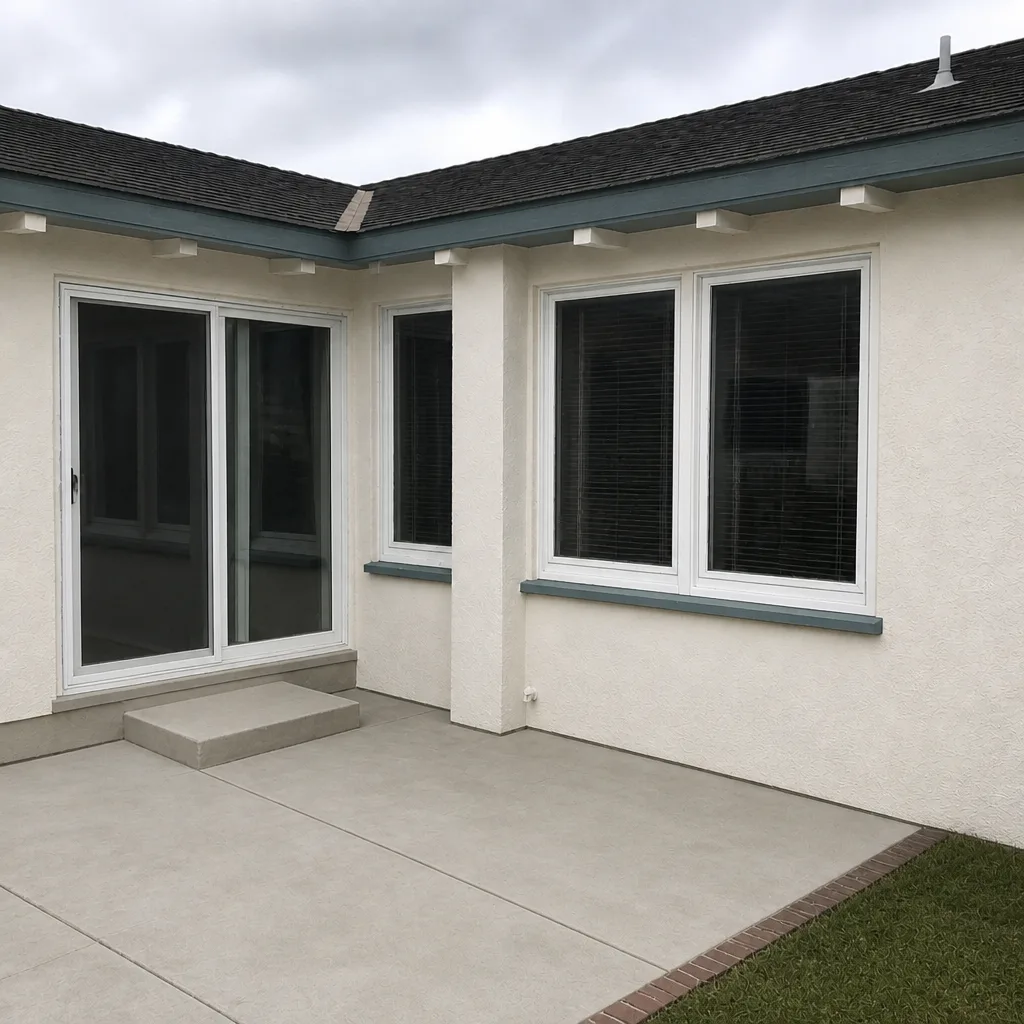 After
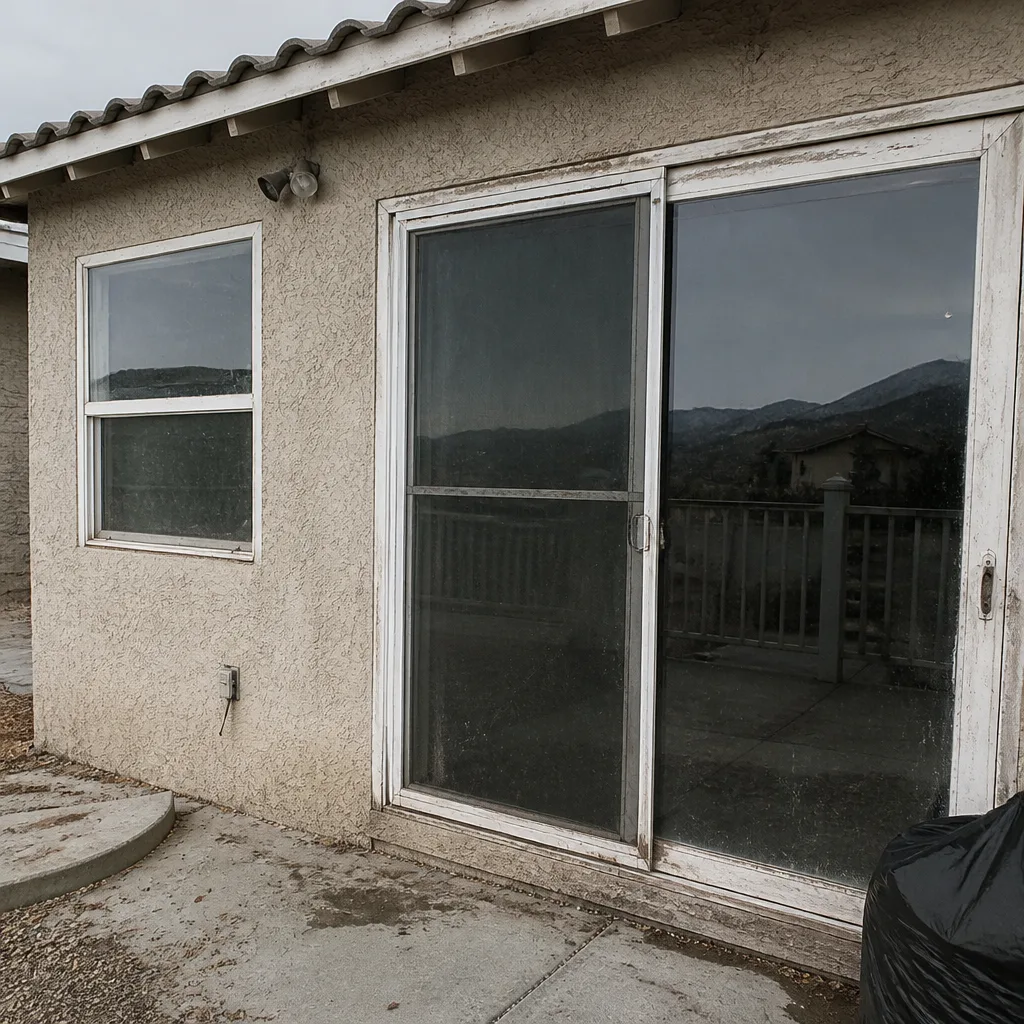 Before
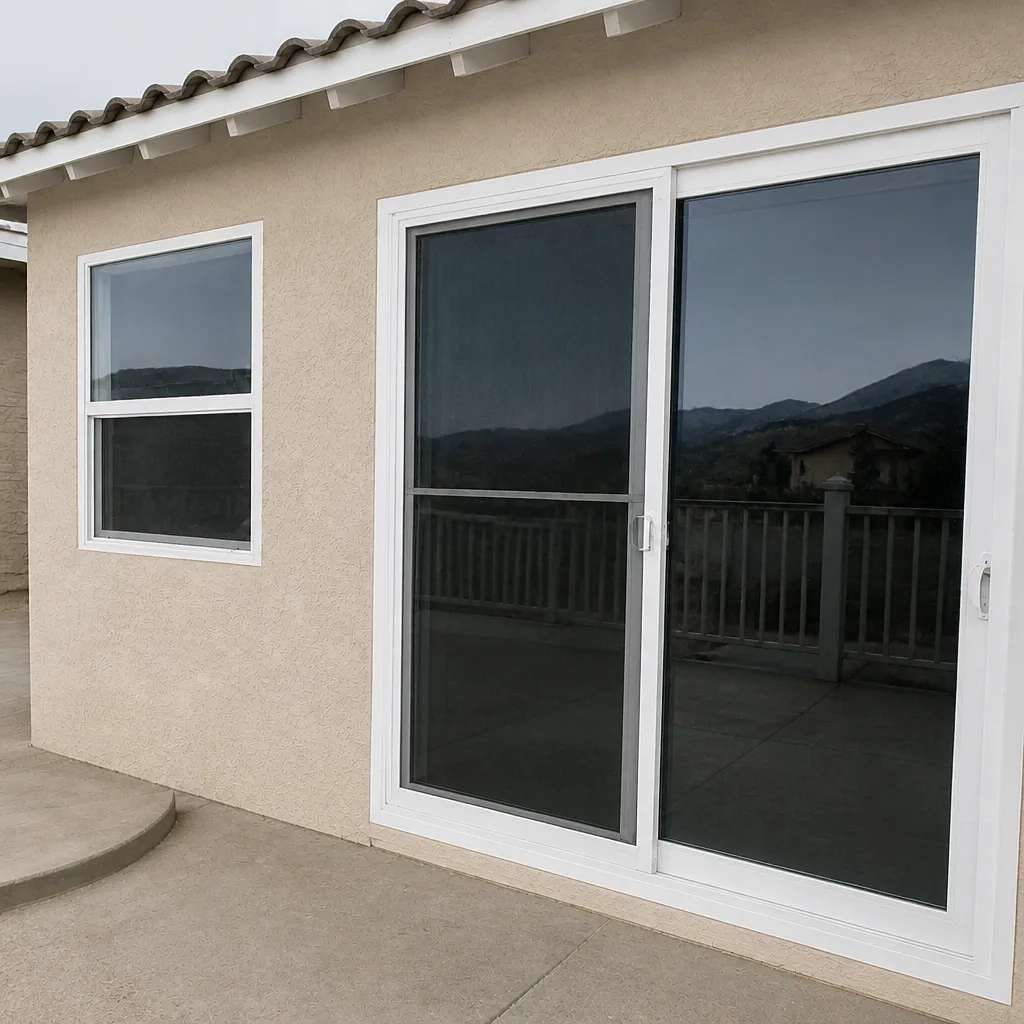 After
When to Call a Professional
Some window and door work is genuinely a weekend project – swapping weatherstripping, re-caulking a sound frame, replacing a worn door seal. Most of what we’ve covered in this guide isn’t. Call a professional when glass is fogged between the panes, when a frame is warped or soft, when you see a cluster of failures on one wall, when water staining appears below a sill, or when you’re planning a replacement that touches opening size, egress, or structure. Those jobs need correct glass spec, proper flashing and sealing for desert wind and monsoon rain, and a permit pulled and inspected where Clark County requires it. A failed installation here fails faster than almost anywhere in the country.
Winslow Windows & Doors Winchester offers free estimates in Winchester – call (855) 859-2922. Our technicians have up to 15 years of experience, every one background-checked and arriving in uniform, and we back the work with our 36500-Day Done Right Promise. If it’s not done right, we make it right.
Frequently Asked Questions
Most Winchester homeowners spend somewhere in the range of $450 to $1,200 per window installed, depending on frame material, glass package, and whether the opening is standard or custom. Whole-house jobs bring the per-window cost down, and single-window jobs sit at the high end. A quote should be line-item and written, so you can see exactly what you’re paying for. Call (855) 859-2922 for an exact quote – estimates are free, and we offer a free second opinion on any written estimate you already have.
Plan on 15 to 20 years for a well-installed quality window in Winchester, versus the 20 to 25 years a mild climate might give you. The gap comes from UV intensity and daily temperature swings that work the seals harder. Cheap vinyl on a west wall can fail sooner. A sound frame with a failed glass seal can often be reglazed and keep going. Call for an assessment – we’ll tell you whether yours is aging normally or failing early.
In Clark County, you generally need a permit when a replacement changes the opening size, affects egress, or touches structural framing; like-for-like same-size swaps sometimes qualify for a lighter path. Rules change, so confirm with the county for your specific address. A reputable installer will pull the permit and pass the inspection, and we do. Call (855) 859-2922 if you want help understanding what your project requires.
Fogging between the panes means the seal on the insulated glass unit has failed and moisture has gotten in. That’s a glass problem, not a frame problem – which is good news, because a sound frame can often be reglazed for less than a full replacement. In Winchester, UV and thermal cycling are the usual culprits. Call us for a free estimate on reglazing or replacement, whichever makes sense.
A big-box window is built to a national spec, while a desert-spec order is configured for high solar exposure and wide temperature swings – different Low-E coatings, warm-edge spacers, heavier frames, and UV-stable finishes. In Winchester’s climate that difference shows up in how long the unit lasts. Ask what glass and spacer a quote includes before you compare prices. We’re happy to walk you through the spec on any brand we install.
Yes, and one failing window is often a repair rather than a full replacement. But if you’re seeing two or three on the same wall fail close together, that’s a sign to look at the whole opening or envelope before spending on a single unit. We’ll tell you honestly which situation you’re in. Call (855) 859-2922 – no trip charge inside our home county, and estimates are always free.
The Bottom Line
Windows and doors in Winchester face a harder life than national guides account for: relentless UV, big daily temperature swings, and wind-driven dust that wears on every seal and moving part. The decisions that matter are matching frame material to exposure, choosing glass tuned for desert heat rather than northern cold, insisting on proper installation and permits, and knowing when one failing window means the whole envelope needs a look. Get those right and your windows will outlast the warranty’s assumptions. Winslow Windows & Doors Winchester is locally owned, installs from eight authorized brands including PGT, CGI, CWS, ES Windows, ECO Window Systems, Mr-Glass, Therma-Tru, and ViewLux, and answers the phone with a live person 24/7. We’re the one down the road.
Call (855) 859-2922 to schedule your free estimate. Upfront pricing, a written line-item quote, and our 36500-Day Done Right Promise on every job.
Written by the team at Winslow Windows & Doors Winchester.